

Femboy Skirt Guide: Pleated, Tulle, A-Line — Which Suits You
Six femboy skirt styles ranked by versatility, with notes on which cut suits which body type, plus a workflow for testing any skirt on your own body before buying.
Skirts are the single most-asked-about piece in femboy style. They're also the piece most beginners get wrong on the first try — usually by buying the cut that looks great on a model and very different on their own build. This guide walks through the six skirt styles that come up most often, what each one does for a male skeleton, and how to tell which one suits you before buying.
Why skirt choice matters more than top choice
A skirt is the load-bearing piece of a feminine silhouette. It defines your waistline, sets the volume of your hips, and controls the visual flow of the entire outfit from the waist down. A great skirt with a mediocre top still reads well. A mediocre skirt under a great top reads off.
This is especially true for femboys, crossdressers and anyone with a male skeleton, because the skirt is your strongest tool for creating hip volume to balance shoulder width. Pick the wrong cut and your outfit fights itself.
The six femboy skirt styles, ranked by versatility
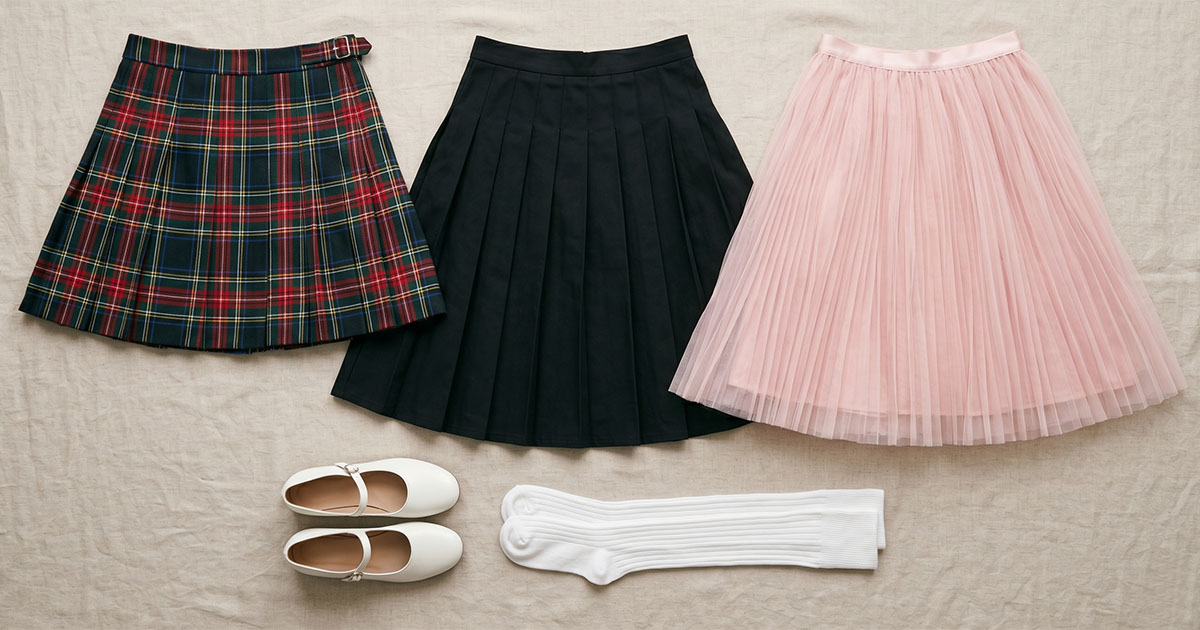
1. Pleated mini (school / tartan)
The most femboy-famous skirt for a reason. The pleats add structural volume at the hips even when the skirt is light, which directly counters shoulder width. The short length elongates legs visually. Works with thigh-highs, knee socks, plain tights, or bare legs.
Best for: wider shoulders, average to taller height, andro/schoolgirl/Y2K/goth aesthetics. Possibly the single most-forgiving skirt style for a male skeleton.
Watch out for: very heavy pleated wool versions sit stiff on the body. Lighter polyester or cotton blends drape better.
Typical length: mid-thigh to just above the knee. Anything shorter than mid-thigh starts requiring strong leg confidence.
2. A-line mini / midi
A-line means the skirt widens steadily from waist to hem in a triangle shape. Without the pleating, the look is smoother and more grown-up. Works in denim, faux leather, suiting, even satin.
Best for: any build. The most universal skirt cut in the list. A-line midi (mid-calf length) skews more cottagecore/dark academia; A-line mini skews more pastel/streetwear.
Watch out for: some "A-line" skirts on retail sites are actually pencil cuts with a slight flare. Check the hem width in the product photo — true A-line has a hem at least 1.5× the waist measurement.
3. Tulle skirt
Multiple layers of soft mesh fabric, often with a satin lining. Creates the most dramatic hip volume of any skirt on this list. Often called "tutu" in shorter versions or "ball skirt" in midi/maxi.
Best for: dramatic outfits, photo days, special occasions, kawaii / pastel / cottagecore aesthetics. Outsized statement, not everyday wear.
Watch out for: tulle catches on things and can be uncomfortable on bare skin. Most have a satin slip lining — confirm before buying.
4. Circle skirt
A skirt cut from a full or half-circle of fabric, creating an extreme flare. Often vintage-inspired or rockabilly. Sits beautifully on hips and twirls dramatically when you move.
Best for: any build that wants to maximize hip volume. Works especially well with belted waist + tucked top combos for an hourglass silhouette.
Watch out for: circle skirts use a lot of fabric and can be heavy in denim or thick cotton. Look for lightweight versions for daily wear.
5. Denim mini
Casual, streetwear-aligned, easy to pair with almost anything. Usually closer to a pencil or slight A-line shape rather than a full flare. Less balancing power than pleated or circle skirts, but the casual factor compensates.
Best for: Y2K, streetwear, andro-casual aesthetics. Daily-wear skirt for people who already have a casual feminine wardrobe.
Watch out for: very stretchy / bodycon denim minis can highlight a flat male hip line. Look for stiffer denim or slight A-line cut.
6. Maxi / floor-length skirt
Long, flowy, often pleated or A-line. Reads cottagecore, romantic, or formal depending on fabric. Doesn't balance shoulders as directly as a flared mini does, but creates a striking vertical line that elongates the whole figure.
Best for: taller frames, cottagecore / academia / boudoir aesthetics, anyone who feels exposed in shorter cuts. Great "first feminine skirt" for people who want less leg visibility.
Watch out for: very narrow maxi skirts (pencil maxi) restrict walking stride and accentuate hip narrowness on male skeletons.
Which skirt suits which body type
Quick reference — match your situation to the recommended cut:
- Wide shoulders, narrow hips: pleated mini, circle skirt, or A-line — anything that adds hip volume. Avoid pencil cuts.
- Tall (over 180 cm): midi or maxi lengths flatter you most. Standard mini lengths sit even shorter on you than on the model photo.
- Shorter (under 170 cm): minis and short A-line midis elongate the legs. Maxis can shorten you visually if not paired with platform shoes.
- Fuller midsection: high-waisted A-line or empire-waist skirts smooth the torso. Avoid drop-waist or low-rise cuts.
- Very lean / no hip line: circle, tulle, or heavily pleated minis create the hip volume you don't have naturally.
- Trying to fly under the radar: longer A-line midi in neutral colors. Reads "androgynous" rather than "femme statement."
How to test a skirt on yourself before buying
The single most expensive mistake in femboy fashion is buying a skirt because it looked perfect on a 175 cm female model and discovering it sits 5 cm shorter and at a totally different waistline on you. Here's how to skip that mistake entirely:
- Find the skirt's product photo on the retailer's site (or any other clear photo of the skirt).
- Take a full-body photo of yourself, standing straight, plain background.
- Upload both to our virtual try-on — you'll see the skirt on your actual build, at your actual hem length, sitting at your actual waist.
- If the length is off, you know to size up or look for the same cut in a longer version.
- If the silhouette doesn't balance your shoulders, try a different cut from the same aesthetic. Pleated instead of pencil, A-line instead of bodycon.
If you want guidance picking the cut in the first place, our AI stylist takes your build and the vibe you're going for and suggests specific skirt styles that will suit you — instead of generic "you'd look good in a skirt" advice.
How to wear a skirt for the first time without panic
Common new-wearer mistakes worth skipping:
- Wear it indoors first. A whole hour at home, not for a photo, just walking around. Lets you feel the fabric movement before any external pressure.
- Pair with tights, leggings or shorts underneath. Removes the windy-day anxiety entirely on the first wear.
- Sit down and walk around in it. Test that you can sit comfortably without exposing yourself, that the hem doesn't ride up uncomfortably, that you can climb stairs.
- Pair with shoes you already own, not new shoes. One unfamiliar variable at a time.
- Don't film yourself the first wear. The first wear is for sensation; recording adds a performance pressure that distorts the experience.
See yourself in a specific skirt before buying →
Next step: matching the right leg wear to your chosen skirt. Our femboy leg wear guide breaks down thigh-highs, fishnets, stockings and tights — which pair with which skirt and which suit which build.
Frequently asked questions
What's the best femboy skirt for beginners?
A pleated mini in tartan or solid black. It's universally forgiving on wider shoulders (the pleats add hip volume), easy to find at any retailer, instantly recognizable as feminine, and pairs with almost any top from your existing wardrobe. Costs less than $25 in most fast-fashion stores.
How short should a femboy skirt be?
Mid-thigh to just above the knee is the most forgiving range for beginners — long enough that sitting and walking are comfortable, short enough that legs read elongated. Go longer (midi or maxi) if you want lower visibility or have constraints on leg confidence; go shorter only once you're comfortable in the standard range.
Will a skirt suit me with no hips?
Yes — that's exactly what cuts with built-in volume (pleated, circle, tulle, A-line) are for. They create hip silhouette that your skeleton doesn't have naturally. Avoid pencil and bodycon cuts, which need actual hip width to look right.
What size should I order in a women's skirt?
Measure your natural waist in cm (the narrowest part of your torso, usually just above the hip bones) and use the retailer's size chart — not the letter size. Most femboys size up one number compared to the chart for women's skirts, because male hip bones sit higher than female and the waist measurement is the limiting factor.
Can I check how a specific skirt will sit on me before buying?
Yes. Upload your full-body photo and the skirt's product photo to our virtual try-on — you'll see the actual length, waist position, and silhouette on your own body. This eliminates most of the sizing surprises that lead to returns.
Do I need to wear something specific under a skirt?
For the first wear, tights, leggings or boxer briefs are fine and remove the wind-anxiety. Once you're more comfortable, the choice is yours — bare legs, sheer tights, fishnets, thigh-highs all work. The skirt cut won't change based on what's underneath.